Phoenix Historic Districts Guide to Homes and Lifestyle
June 25, 2026
June 25, 2026
If you love the idea of living somewhere with real character, Phoenix’s historic districts deserve a closer look. These neighborhoods offer more than charming facades. They combine central locations, distinct architecture, and a strong sense of place that can feel very different from newer suburban communities. If you are weighing lifestyle, renovation realities, and long-term fit, this guide will help you understand what makes Phoenix historic districts unique. Let’s dive in.
Phoenix has 36 residential historic districts on its Historic Property Register. According to the City of Phoenix, these districts are protected through historic preservation overlay zoning and a special review process for certain exterior changes and demolition requests.
That matters because historic designation in Phoenix is not one-size-fits-all. A local Phoenix historic preservation zoning designation is what triggers local review. National Register listing by itself does not create the same local protection.
For buyers, this means you are not just shopping for an older home. You are also choosing a neighborhood framework that can shape future updates, maintenance decisions, and the overall feel of the streetscape.
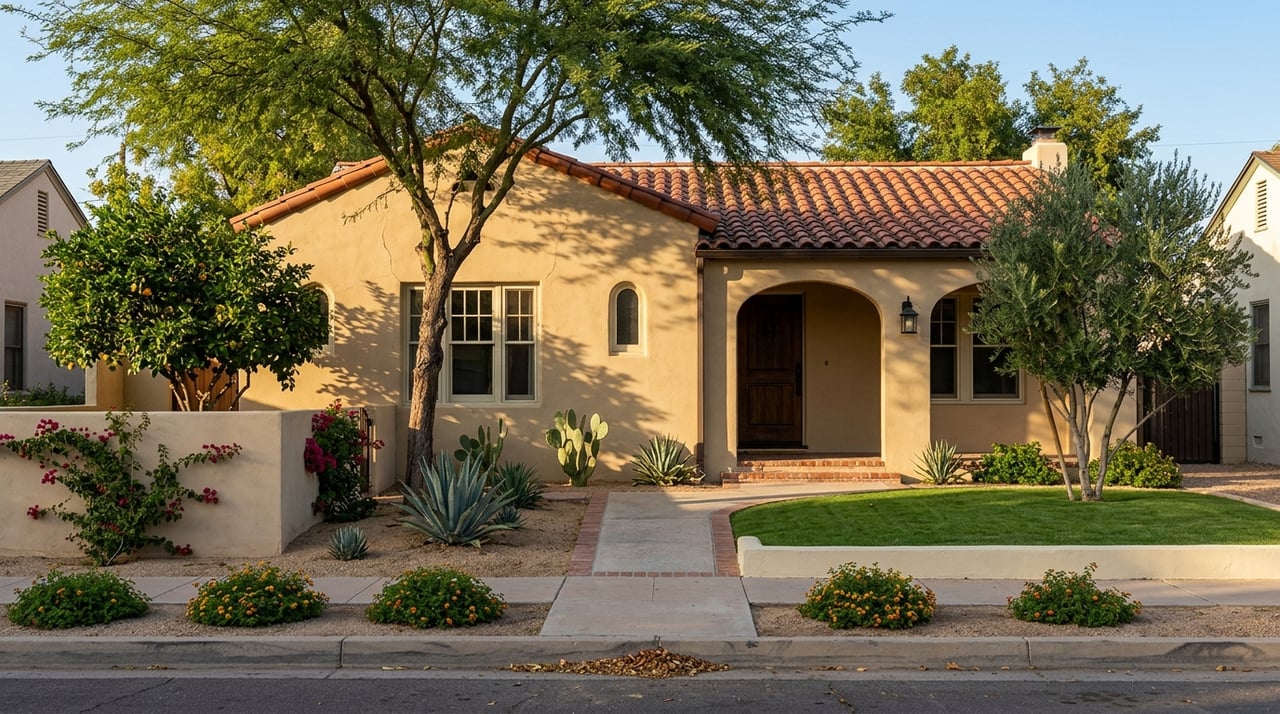
Phoenix historic districts include homes from early streetcar-suburb growth through the 1940s and early 1950s. Across these neighborhoods, you will often see bungalow and Craftsman homes, Tudor Revival, Spanish Colonial Revival, Monterey, Minimal Traditional, and later Ranch styles.
That variety is part of the appeal. Instead of rows of similar floor plans, you will often find blocks with different rooflines, porches, window patterns, and exterior details. For design-conscious buyers, that architectural mix can be a major draw.
At the same time, older homes may come with older layouts. You may find smaller closets, fewer bathrooms, or floor plans that reflect how people lived decades ago. The tradeoff is often more personality, more established streetscapes, and a stronger sense of neighborhood identity.
Encanto-Palmcroft is one of the best-known historic districts near downtown Phoenix. It has about 330 households and a strong identity tied to nearby Encanto Park.
The architecture here is diverse, including Spanish Colonial, Tudor Revival, Cape Cod, Monterey Revival, and many 1930s- and 1940s-era Minimal Traditional homes. The overall atmosphere is intentionally residential and refined rather than dense and commercial.
If you want a historic neighborhood that feels polished and park-adjacent, Encanto-Palmcroft is often high on the list. Buyers who value architecture, mature surroundings, and a social neighborhood feel often compare it with other central Phoenix historic areas.
Willo is one of Phoenix’s first historic suburbs and remains one of the city’s most recognized historic neighborhoods. Its palm-lined streets and range of Tudors, Bungalows, Spanish Colonials, and later Ranch homes give it a classic central Phoenix look.
Willo also stands out for access. The neighborhood association highlights its central connection to the airport, transit, museums, and arts destinations, which adds convenience for buyers who want historic character without feeling removed from the urban core.
If you are looking for a strong neighborhood identity with easy access to central Phoenix amenities, Willo can be a compelling fit. It appeals to buyers who want both charm and connectivity.
F.Q. Story began as a streetcar suburb and today includes 602 homes built from the late 1920s through the late 1940s. Architectural styles include Spanish Colonial Revival, English Tudor, Craftsman bungalows, and transitional ranch homes.
The neighborhood’s history still shapes its appeal. As the automobile replaced the streetcar era, detached garages and porte cocheres became more common, which adds another layer of visual interest to the housing stock.
F.Q. Story is also known for an active, resident-driven preservation culture. Welcome packets, newsletters, block watch, yard sales, and a front-porch social atmosphere all contribute to a neighbor-to-neighbor feel that many buyers find appealing.
Roosevelt was Phoenix’s first officially designated historic neighborhood. It is also one of downtown Phoenix’s most walkable historic communities.
Architecturally, Roosevelt includes a broad range of styles, from Victorian vernacular and Neoclassical Revival to Bungalow, Period Revival, Prairie, Southwestern vernacular, and Moderne examples. That gives the neighborhood an eclectic and layered feel.
For buyers who want historic homes with quick access to parks, restaurants, cafés, galleries, and Hance Park, Roosevelt often stands out. It is a strong option if your priority is an urban lifestyle with historic character.
Windsor Square is a 260-home neighborhood established in 1929. Its curving streets and older-home character create a more suburban feel than some other central Phoenix historic districts, even though it remains close to city amenities and light rail.
According to the city handout, 178 of its 260 homes are Ranch variations, with additional period-revival, International, and Southwestern examples. That makes Windsor Square especially interesting for buyers who want historic designation with more mid-century influence.
If you like the idea of a historic neighborhood but want a less dense streetscape, Windsor Square may be worth a closer look. It often appeals to buyers who want space and character in the same package.
Two other neighborhoods help round out the historic-district picture in Phoenix. Coronado’s greater area includes more than 5,000 households and hundreds of businesses, with housing that ranges from California Bungalow and Spanish Colonial Revival to ranch homes and occasional modern updates.
Garfield is the city’s largest historic district by property count in the official city handout. It is especially known for its concentration of Pyramid Cottages, along with Vernacular, Bungalow, Period Revival, and Ranch styles.
These neighborhoods show how broad the historic-home market can be in central Phoenix. Some areas feel more grassroots and eclectic, while others feel more polished or park-oriented.
One of the biggest decisions is whether you want the character of a historic district or the convenience of a newer suburban home. In Phoenix, that choice often comes down to what matters most in your daily life.
Historic districts usually appeal to buyers who value location, architectural character, mature landscaping, walkability, and neighborhood identity. Newer homes often offer larger footprints, newer systems, and fewer design-review steps.
Here is a simple comparison:
| Priority | Historic Districts | Newer Suburban Homes |
|---|---|---|
| Architecture | Distinctive and varied | More uniform |
| Location | Often central | Often farther from urban core |
| Streetscape | Established and mature | Newer and more planned |
| Floor plans | Older layouts are common | Usually more current |
| Renovation process | More review for exterior work | Typically simpler |
| Sense of place | Often stronger | Varies by community |
Neither option is automatically better. It depends on whether you are looking for flexibility and newer systems, or whether you are drawn to the lifestyle that comes with historic surroundings.
If you buy in a Phoenix historic district, renovation rules should be part of your planning from day one. The City of Phoenix says exterior changes to HP or HP-L properties go through city historic review, while routine painting is excluded and interior work that does not affect the exterior does not require Historic Preservation Office review.
For minor work, you may be able to use a Certificate of No Effect. More complex or street-visible work may require a Certificate of Appropriateness.
In practical terms, visible remodels should be checked against the city review process before contractor work begins. This is especially important if you are considering windows, additions, exterior materials, or changes that affect the public-facing look of the home.
With historic homes, the building shell deserves close attention. The city’s preservation guidance recommends starting with an energy audit and looking first at lower-cost weatherization measures such as window treatments, shade trees, leak repairs, weatherstripping, and other building-envelope improvements.
The city also notes that historic windows can often be repaired or upgraded, and that abrasive masonry treatments like sandblasting should be avoided. For buyers, that means cooling strategy, insulation approach, and overall exterior condition may matter more than fresh finishes alone.
A beautiful kitchen is great, but in a Phoenix historic home, long-term comfort and upkeep often start with the roofline, windows, shade, and exterior materials. Looking at those basics early can help you budget more wisely.
Phoenix says owners of HP- and HP-L-zoned properties may be eligible for local incentives and financial assistance, including support for exterior rehabilitation. The city also notes that National Register properties may qualify for additional state and federal incentives.
That can make a meaningful difference if you plan to restore or improve a property. Buyers who understand those possibilities early may be better positioned to evaluate total project cost and decide how far they want to go with updates.
This is one reason a concierge approach matters when you shop historic homes. It helps to evaluate not just the home you see today, but also the approval path, likely maintenance priorities, and how renovation plans could align with available programs.
The best historic neighborhood for you depends on how you want to live. If you want a polished, park-adjacent setting, Encanto-Palmcroft or Windsor Square may stand out.
If your goal is stronger urban walkability, Roosevelt and Willo are often top contenders. If you are drawn to streetcar-era housing and a more resident-driven preservation culture, F.Q. Story and Garfield may feel like a better fit.
This is where neighborhood expertise becomes valuable. Two historic districts can both be charming on paper but offer a very different day-to-day experience in terms of layout, lot feel, access, and renovation expectations.
Phoenix historic districts are not just about old houses. They are about architecture, central location, established streetscapes, preservation rules, and the tradeoff between charm and flexibility.
If you are thinking about buying in one of Phoenix’s historic neighborhoods, having the right guidance can make the process much clearer. The team at Inspired Living Real Estate Collective brings a concierge approach, curated neighborhood expertise, and practical insight to help you find a home that fits both your lifestyle and your plans.
Stay up to date on the latest real estate trends.


How to Get Your Home, Money & Life a Little More Together
Supporting your real estate goals with comprehensive information and expert advice. We look forward to the opportunity to serve you! Work with the team now!
Get In Touch With Our Team To Learn More
INSPIRED LIVING REAL ESTATE COLLECTIVE
7025 E Via Soleri Dr #125 Scottsdale, AZ 85251