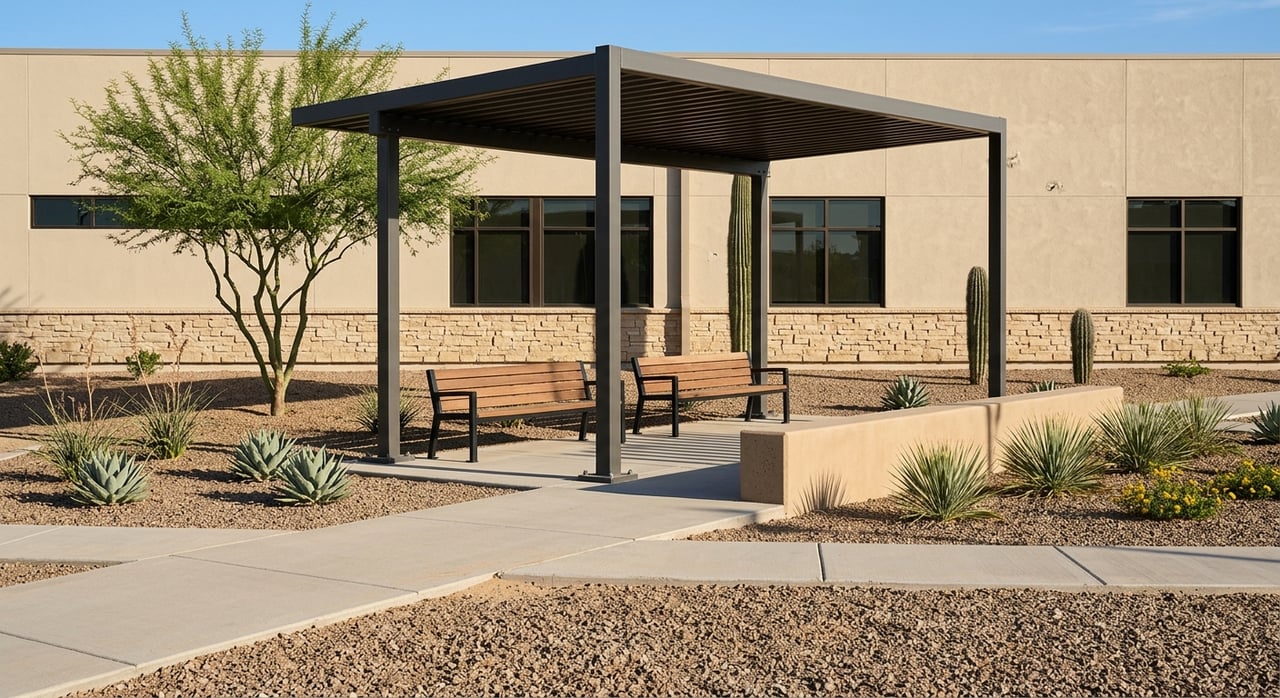
Mesa Master Planned Communities: Eastmark vs. Cadence
July 16, 2026
July 16, 2026
If you are shopping in southeast Mesa, one question comes up fast: should you choose a newer master-planned community or look at a more traditional neighborhood? It is a smart question, especially in the Gateway corridor, where communities like Eastmark and Cadence offer newer infrastructure, organized amenities, and a more structured day-to-day experience. If you want to understand how these communities really work, what they cost, and what trade-offs come with them, this guide will help you compare your options with more confidence. Let’s dive in.
Mesa’s southeast Gateway corridor has been shaped by long-term planning tied to growth around Phoenix-Mesa Gateway Airport. The City of Mesa adopted the Mesa Gateway Strategic Plan to guide land use, transportation, infrastructure, and funding in this area.
For buyers, that matters because communities here were not built in isolation. They were part of a broader growth story, which helps explain why places like Eastmark and Cadence often feel newer, more coordinated, and more intentionally planned than older neighborhoods in other parts of Mesa.
A master-planned community usually offers more than a collection of homes. You are often buying into a larger framework that can include parks, trails, amenity centers, landscaping standards, and community rules that shape how the neighborhood looks and functions.
In Mesa’s Gateway corridor, that structure also affects cost. The City of Mesa says Eastmark and Cadence both have Community Facilities Districts, or CFDs, that were formed to fund improvements like parks, roads, sewer, water, storm drains, signage, street lights, landscaping, and related infrastructure.
When buyers compare homes, the sticker price is only part of the picture. In master-planned communities, your monthly carrying cost may include mortgage payments, HOA dues, and CFD-related property tax assessments.
Mesa notes that CFD assessments are tied to the property, not the owner. That means they may stay with the home after a sale or refinance unless a lender or title company requires payoff, which is one reason two homes with similar prices can feel different month to month.
Mesa says current Eastmark and Cadence operations and maintenance charges are $0.30 per $100 of net assessed value. Debt-service target rates are $2.27 and $2.66 for Eastmark CFD Nos. 1 and 2, while Cadence’s target rate is $2.17.
You do not need to memorize those numbers, but you should know what they mean. If you are comparing homes in southeast Mesa, asking for a full monthly cost breakdown is essential, especially when you are weighing newer amenities against recurring fees.
Eastmark is a 3,200-acre community located between Ellsworth and Signal Butte, south of Elliot. The community says it is convenient to the 101, 202, and 60 freeways and just minutes from Phoenix-Mesa Gateway Airport.
A major shift for buyers is that Eastmark’s final new home has been sold. In practical terms, that means your search in Eastmark is now mainly a resale search rather than a new-construction search.
A resale-focused community can offer a different kind of opportunity. Instead of choosing from builder inventory, you are comparing existing homes, lot positions, upgrades, condition, and how close each property sits to the features you care about most.
Eastmark’s historical housing mix also matters here. The community has included single-family homes, smaller-style homes, large-lot gated homes, 55-plus neighborhoods, apartments, and townhomes, which creates several submarkets within one master plan rather than one uniform housing type.
One of Eastmark’s most important distinctions is that not all amenities work the same way. The Great Park is public, owned and operated by the City of Mesa, and includes a splash pad, event pavilion, climbing structure, disc golf, open fields, trails, and a skate park.
At the same time, The ‘Mark community center, pool, and other resident amenities are reserved for residents and tenants in good standing and require resident card access. For buyers, this is a useful reminder that a community can blend city-owned spaces with resident-only amenities, and that access rules may differ depending on the feature.
Cadence is a smaller master-planned community in the Gateway corridor. Its size is listed a little differently by source, with Harvard Investments describing it as roughly 460 acres and City of Mesa planning documents referencing an overall 484-acre community area.
That difference is not unusual in large-scale development materials, but the key takeaway is clear. Cadence is more compact than Eastmark and tends to present a more centralized, HOA-centered living experience.
Cadence centers many of its shared features around The Square. According to Harvard Investments, amenities include a resort-style pool, fitness center, community center, STIR hangout space, event space, tennis and bocce courts, a fire pit, play areas, a sport field, and a garden.
Park counts vary by source. Harvard describes 13 parks and miles of paths, while the HOA site says the community currently has six parks with more on the way, plus a dog park and sports courts.
In Cadence, the HOA is a very visible part of daily life. The association says it handles maintenance for common areas, walls, landscaping, parks, playground equipment, and amenities.
The HOA also requires amenity cards, liability waivers for amenity use, and design review approval before homeowners make exterior changes. If you like organized standards and shared upkeep, that may feel reassuring. If you prefer fewer rules, it is something to weigh carefully.
A master-planned community is not always made up of only one kind of home. That is especially true in this part of Mesa, where both Eastmark and Cadence include a range of housing types.
In Cadence, Harvard lists single-family detached homes, multi-family residences, and a gated single-family rental home neighborhood. For buyers, that can influence the feel of different pockets within the community, rental activity in some areas, and resale patterns over time.
For many buyers, school access is part of the search process, even when school choice and boundaries are still being sorted out. In this area, that topic comes up often because Queen Creek Unified says it serves part of southeast Mesa.
Eastmark materials identify BASIS Mesa, Sequoia Pathfinder Academy, and Eastmark High School within the community, with Gateway Polytechnic Academy just outside the eastern border. For Cadence, Queen Creek Unified lists Gateway Polytechnic Academy and Silver Valley Elementary in Mesa 85212, and Harvard says Silver Valley Elementary is in the community area with a new high school across the street.
The most practical takeaway is simple: if school location is a priority, verify current attendance options and campus access early in your search. In this part of Mesa, assumptions can lead to surprises.
If you are choosing between these two communities, the better fit usually comes down to how you want to live day to day. Both offer planned amenities and a newer-infrastructure feel, but the experience is not identical.
| Feature | Eastmark | Cadence |
|---|---|---|
| Community size | 3,200 acres | About 460 to 484 acres |
| Buyer focus today | Mostly resale | Mix depends on current inventory |
| Amenity style | Public Great Park plus private resident amenities | Strongly centered on HOA-managed shared spaces |
| Housing mix | Multiple submarkets and housing types | Detached, multi-family, and rental mix |
| HOA visibility | Present, but mixed with city-owned features | More visible in daily use and design controls |
The best way to compare a master-planned community is to look beyond the model-home appeal and ask how it fits your real life. That includes your budget, your routine, and your comfort with community rules.
Here are a few smart questions to ask during your search:
In southeast Mesa, the main trade-off is often convenience and amenity density versus recurring costs and rule-based maintenance. Some buyers love the predictability of coordinated landscaping, shared facilities, and community standards.
Others decide they would rather have more flexibility in an older neighborhood with fewer ongoing fees. Neither choice is automatically better. The right answer depends on how much structure you want in exchange for newer infrastructure, trail systems, and a more planned environment.
Eastmark and Cadence both reflect the growth and planning of Mesa’s Gateway corridor, but they serve buyers a little differently. Eastmark feels more established and resale-driven today, with a notable mix of public and private amenities, while Cadence offers a more compact and HOA-centered experience with a strong shared-amenity focus.
If you are comparing these communities, a concierge approach can make the process much easier. The right guidance helps you look past surface-level features and focus on the details that shape your budget, your lifestyle, and your long-term satisfaction. If you want help comparing Mesa neighborhoods, resale opportunities, or curated listings across the East Valley, connect with Inspired Living Real Estate Collective.
Stay up to date on the latest real estate trends.



How to Get Your Home, Money & Life a Little More Together
Supporting your real estate goals with comprehensive information and expert advice. We look forward to the opportunity to serve you! Work with the team now!
Get In Touch With Our Team To Learn More
INSPIRED LIVING REAL ESTATE COLLECTIVE
7025 E Via Soleri Dr #125 Scottsdale, AZ 85251