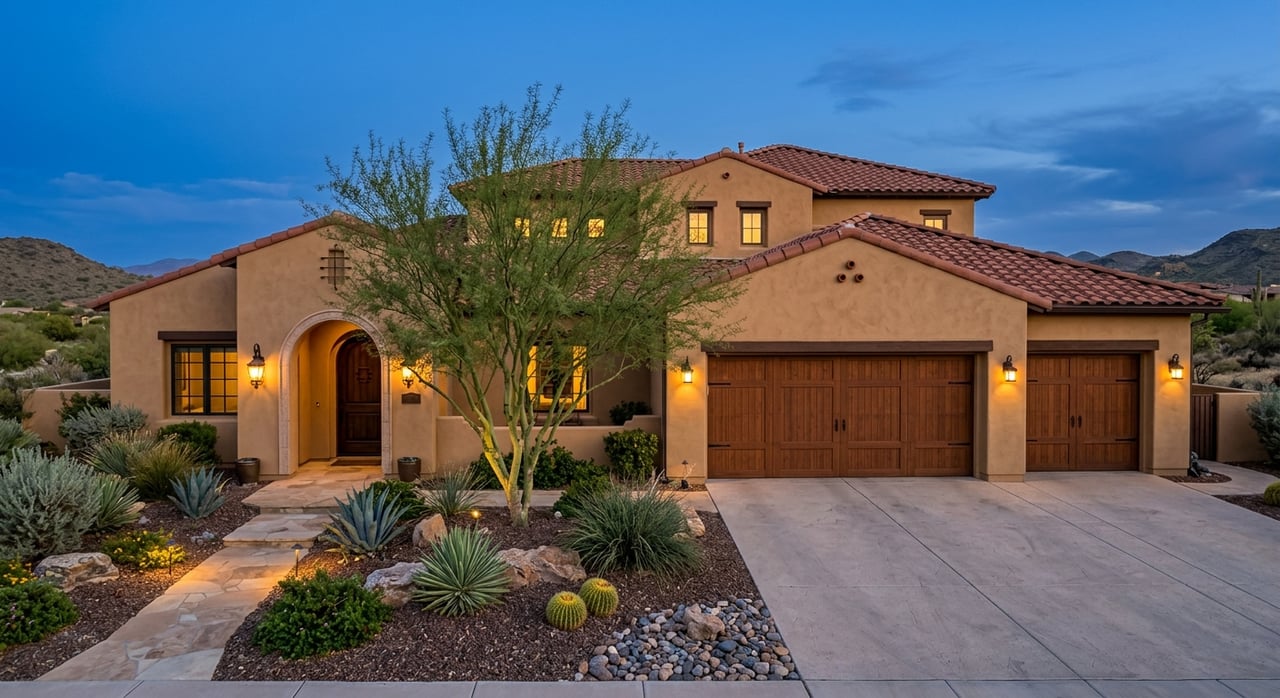
Short-Term Rental Investing Around Glendale Sports Venues
May 21, 2026
May 21, 2026
Wondering if buying a short-term rental near Glendale’s sports venues is a smart move? It can be, but this is not the kind of market where you buy any house near a stadium and hope for the best. If you are thinking about investing around State Farm Stadium, Westgate, or Camelback Ranch, you need to understand demand, regulations, seasonality, and day-to-day operations before you make an offer. Let’s dive in.
Glendale has one of the strongest event-driven demand stories in the West Valley. State Farm Stadium alone has 63,400 fixed seats, can expand to more than 73,000, hosts about 120 events a year, and averages around 1.2 million annual attendees. That creates a steady stream of visitors tied to football, concerts, and major special events.
The surrounding entertainment district adds demand beyond stadium weekends. Desert Diamond Arena brings in more than one million visitors annually, and Westgate adds dining, nightlife, shopping, community events, concerts, and sporting events. For investors, that matters because guest demand is not tied to one venue alone.
Glendale also benefits from spring training. Camelback Ranch, home to the Los Angeles Dodgers and Chicago White Sox, includes 10,000 stadium seats and 3,000 lawn seats, which helps drive visitor traffic in February and March. That extra layer of demand can help extend the busy season beyond a single sports calendar.
Properties near the Glendale Sports and Entertainment District can appeal to guests who want easier access on event days. Because the venues are clustered, a nearby rental may benefit from better convenience, less time in traffic, and simpler access to dining and entertainment. In practical terms, that can make your listing more attractive when travelers are comparing options.
That said, “close to the stadium” should not be your only investing filter. A home still needs to function well when the event calendar slows down. The strongest candidates usually combine location with parking, freeway access, and a layout that works for groups.
Recent market data suggests Glendale can be rewarding, but it is also competitive. In AirROI’s 2026 Glendale dataset, the market shows about 718 active listings, average annual revenue of $32,178, an average daily rate of $262, occupancy of 40.2%, and RevPAR of $109. Those numbers point to solid income potential, but not a passive, plug-and-play investment.
The local inventory also leans group-friendly. AirROI reports that 56.8% of Glendale listings have three or more bedrooms, and 41.9% can host eight or more guests. That fits the area’s event-driven demand, where families and groups often travel together for games, concerts, and spring training.
Seasonality matters too. One Glendale market report shows ADR peaking from January through March at roughly $315, while low-season ADR is closer to $191 and summer occupancy averages about 43%. In other words, your pricing and operations need to flex with the calendar.
Peoria is a useful comparison if you are evaluating West Valley options. AirROI’s dataset shows Peoria with 396 active listings, average annual revenue of $28,519, ADR of $261, occupancy of 39.5%, and RevPAR of $106. Based on those figures, Glendale appears slightly stronger on revenue and demand, though it also has more competition.
The demand mix is different as well. Glendale appears more year-round and event-oriented, supported by stadium events, arena traffic, nightlife, and spring training. Peoria has its own draw with the Peoria Sports Complex, recreation, trails, and Lake Pleasant, but the overall profile looks more seasonal and recreation-focused.
There is also a regulatory difference. Glendale’s public-facing process centers on registration and complaint-response contacts, while Peoria requires a vacation-rental permit before operation and asks for neighbor notification, proof of insurance, TPT compliance, and county assessor registration. If you are comparing cities, that difference affects both startup steps and operational complexity.
Arizona generally does not allow cities and counties to ban short-term rentals outright, but local governments can regulate certain areas like health and safety, nuisance issues, permits or licenses, neighbor notification, and insurance. In Arizona, short-term lodging generally means stays of fewer than 30 days. That framework gives Glendale some oversight, even though the state limits broader local restrictions.
In Glendale, the public process focuses on registration through GovOS. The city says owners must provide an emergency contact and an owner contact for complaints, and connect the property to an Arizona Department of Revenue TPT license and Maricopa County Assessor registration. Glendale also notes that this registration is currently free.
You should also pay attention to enforcement. Glendale says its nuisance-party ordinance applies to private residences, including short-term rentals. That means owners need a clear system for guest communication, rules, and issue response, especially near busy entertainment areas.
Transient lodging taxes are an important part of underwriting. Glendale’s city tax profile lists a 2.90% Hotels rate and a 5.00% Hotel/Motel Additional Tax. Since short-term stays under 30 days fall under transient lodging treatment rather than the 2025 residential rental tax change, investors should confirm exactly how taxes are being collected and remitted for their property setup and booking channels.
This is one of those details that can change your real return if you gloss over it. Before you buy, make sure you understand how the home will be registered and how occupancy taxes will be handled from day one. Clean underwriting starts with accurate assumptions.
The upside of a sports-adjacent rental is demand. The challenge is that event-day operations can be more intense than in a typical suburban short-term rental. State Farm Stadium recommends advance parking purchases and notes that guests are directed by Glendale police and parking staff on event days, while Westgate warns that parking fees and timeframes can change.
For you as an investor, that means guest experience starts before check-in. You need clear parking instructions, event-day guidance, and messaging that helps guests understand traffic flow and access. A great location can quickly become a bad review if the logistics feel confusing.
Nuisance risk is the other major issue. In a sports and entertainment corridor, guest excitement can translate into noise, extra cars, or complaints if expectations are not managed well. The homes that perform best over time are usually the ones run with hospitality-level systems, not casual absentee ownership.
If you are shopping for a short-term rental around Glendale sports venues, focus on fundamentals that support both peak demand and quieter periods. You want a property that works well for event travelers without relying only on game-day bookings. That balance helps protect your income through different seasons.
A strong candidate often includes:
It is also wise to think about the guest profile your layout supports. A home that comfortably handles families or small groups may align better with local demand than a property that looks good on paper but feels tight in person.
Glendale’s supply grew 121.6% year over year in the AirROI dataset, even while revenue and nightly rates trended upward. That is encouraging, but it also signals a market where execution matters. More inventory means guests have choices, so operations, pricing, and presentation can make a meaningful difference.
This is where a concierge approach to acquisition can help. The right investment is not just about buying near a popular venue. It is about choosing a property with the right layout, access, and use case, then underwriting it with realistic expectations about regulation, taxes, seasonality, and management demands.
If you are exploring short-term rental investing in Glendale, a local, strategy-first approach can save you from expensive assumptions. Inspired Living Real Estate Collective helps investors evaluate opportunities across greater Phoenix with practical market insight, curated property guidance, and a relationship-driven process designed to support smart decisions.
Stay up to date on the latest real estate trends.

Less Scrolling, More Living: Finding Gratitude, Contentment & Connection in a Noisy World

10 questions to help you decide if your home still fits your life.


Supporting your real estate goals with comprehensive information and expert advice. We look forward to the opportunity to serve you! Work with the team now!
Get In Touch With Our Team To Learn More
INSPIRED LIVING REAL ESTATE COLLECTIVE
7025 E Via Soleri Dr #125 Scottsdale, AZ 85251